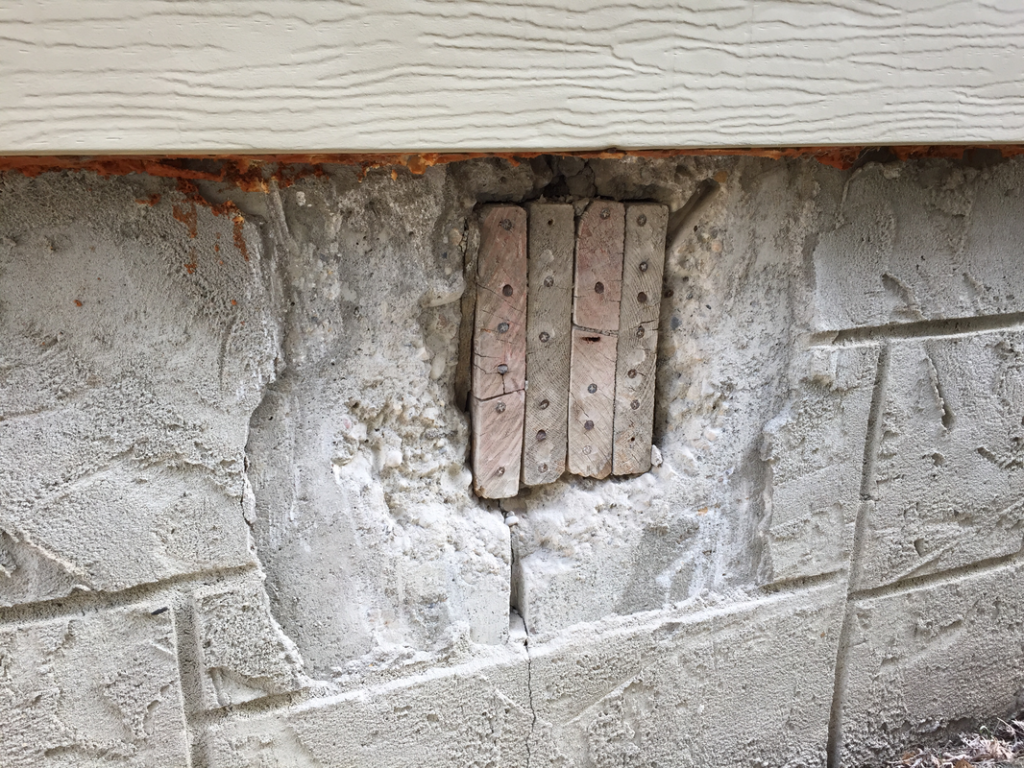
Parging usually fails because of a problem with preparation, bonding, moisture exposure, movement or the way the material was applied. The visible crack or flaking area is the symptom. The important part is understanding what is happening underneath before adding another coat.
A localized parging repair can make sense when the surrounding material remains sound and firmly bonded. When hollow or deteriorated areas extend across a larger portion of the wall, a full-wall recoat or replacement is usually the more consistent approach.
1. Poor Surface Preparation
New cementitious parging needs a stable, clean surface. Dust, dirt, loose material, failing paint and weak existing parging can all interfere with the bond. Applying a fresh coat over an unstable surface may look fine at first, but the new material can separate with the layer underneath it.
Loose and delaminated material should be removed back to a stable edge. Sound, well-bonded parging can remain when it provides a suitable prepared base.
2. The Wrong System for the Substrate
Concrete, masonry, ICF and framed transitions are not the same substrate. A system that works directly over prepared concrete should not automatically be used over foam or wood.
For example, our ICF parging uses a reinforced cementitious assembly with galvanized metal lath mechanically fastened to the ICF structure. Treating ICF like ordinary concrete is a common way to create an unreliable finish.
3. Cracks or Movement in the Foundation
A crack visible in the parging may be limited to the finish, or it may reflect movement in the concrete or masonry underneath. Fibreglass mesh can be useful over appropriate cracks and transitions, but reinforcement in the parging cannot stop significant structural movement.
If movement continues, the surface can crack again even when the parging itself was installed correctly. Structural foundation repair, crack injection and drainage correction are separate from parging work.
4. Moisture and Freeze-Thaw Exposure
Edmonton foundations experience repeated wetting, drying and freeze-thaw cycles. Moisture that enters weak or poorly bonded material can contribute to cracking, scaling and separation when temperatures drop.
Grading, downspouts, splashback, driveway movement and other exterior conditions can also affect the foundation finish. Parging is not below-grade waterproofing and cannot correct a drainage problem that is continually driving moisture toward the wall.
5. Unsuitable Weather or Curing Conditions
Cementitious material needs suitable air and substrate temperatures while it bonds and begins curing. We generally schedule exterior parging when temperatures are expected to remain at least 4°C for approximately 48 hours.
Very hot, dry or windy conditions can also cause the surface to lose moisture too quickly if the work is not managed properly. Cementitious parging continues developing strength after installation, with full curing generally taking about 28 days.
6. Recoating Over Hollow or Failing Parging
One of the most common mistakes is covering a failed coating without dealing with the failed bond. A thin new coat cannot make hollow parging underneath become firmly attached again.
This is why the scope should be based on the actual condition of the wall. Defined damage may be repaired. Widespread hollow sections, repeated patches, heavy deterioration or unreliable painted surfaces usually point toward broader recoating or replacement.
What Should You Do If Your Parging Is Failing?
Start by looking at more than the most obvious crack. Check the surrounding wall for hollow sounds, loose edges, flaking, previous patches and signs that the finish is separating. Photos showing both close-up damage and the full wall are often enough for us to determine the likely scope.
If you are planning the project budget, see our Edmonton parging cost guide. Qualifying J and J Coatings parging work is backed by our 30-year transferable written warranty, subject to the warranty terms and exclusions.