Why High-Quality Parging Materials Matter in Edmonton
Parging is a protective and decorative finish applied to exposed concrete and masonry foundations. In Edmonton, the material must tolerate repeated wetting and drying, freeze-thaw cycling, snow accumulation and temperature changes while remaining compatible with the foundation beneath it.
At J and J Coatings, we use cementitious materials, bonding products and reinforcement methods selected for the substrate and condition of each project. Proper materials matter, but preparation, application thickness, finishing and curing are just as important. Parging is not a substitute for foundation waterproofing, drainage correction or structural repair.
Learn more about our parging repair and parging replacement services in Edmonton.
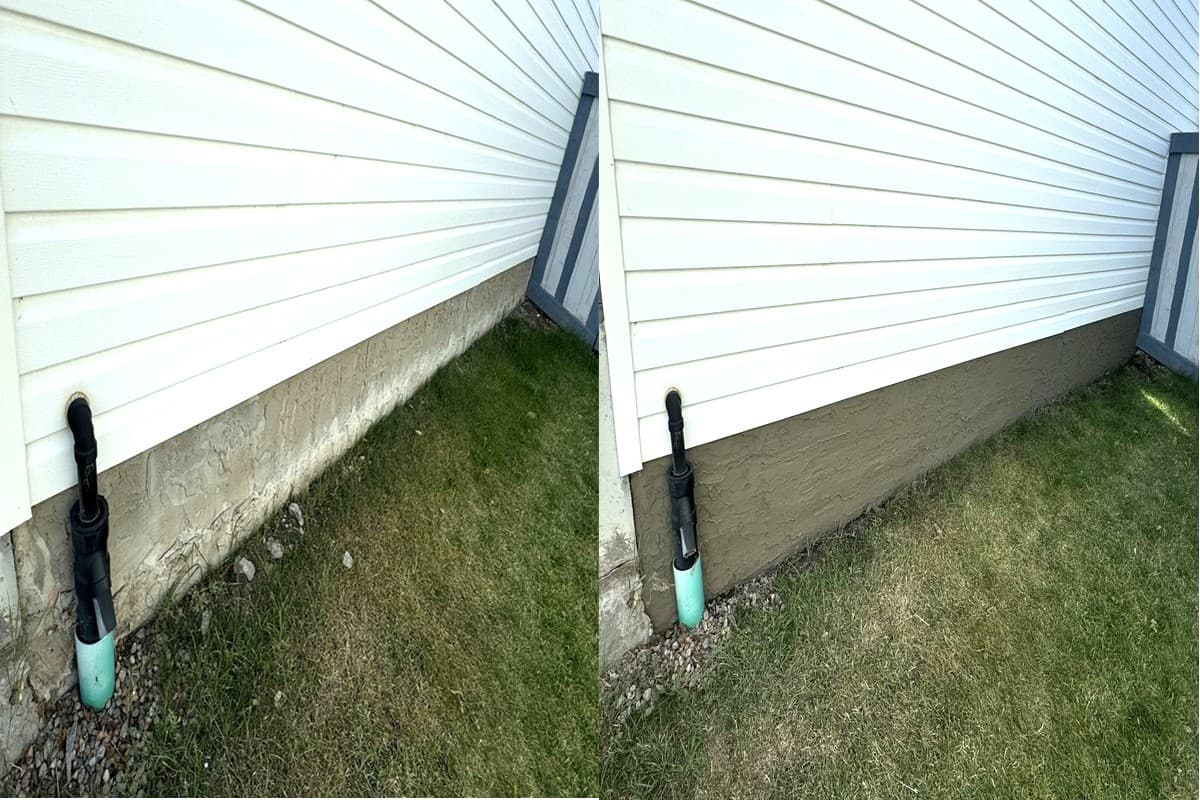
Before and after professional parging repair on a house foundation in Edmonton by J and J Coatings.
What Materials Are Used for Durable Foundation Parging?
Cementitious Mortar
For new concrete and masonry, our new foundation parging uses an exterior cementitious mortar suitable for the substrate. The main components include:
- Cementitious binders – Provide strength and form the mineral base of the finished coating.
- Graded sand and aggregate – Add body, control texture and contribute to durability.
- Lime or other workability components – Improve handling, finishing and adhesion when included in the selected mix.
- Water – Must be carefully controlled. Too much water can weaken the mix and increase shrinkage.
The exact product and mixing procedure depend on the substrate, existing condition, required thickness and manufacturer instructions. A durable result comes from using a compatible system rather than treating every foundation the same way.
Bonding and Performance Admixtures
Where appropriate, we use bonding agents or polymer-modified admixtures to improve adhesion between the prepared substrate and the new cementitious parging. Air-entraining admixtures may also be used to improve resistance to freeze-thaw exposure.
These products do not turn parging into waterproofing, and they do not compensate for inadequate preparation, active leaks or structural movement.
Reinforcement for Cracks and Transitions
Different conditions require different reinforcement methods:
- Fibreglass reinforcing mesh may be embedded over cracks, transitions and other vulnerable areas.
- Galvanized metal lath is used where cementitious parging must be supported over suitable non-masonry substrates, such as properly prepared wood or ICF areas.
- Membranes, flashings and transition details may be required where the foundation finish meets other building materials.
Reinforcement can improve performance, but no mesh or lath system can prevent cracking caused by significant structural movement.
Not sure what your foundation needs?
Send us a few clear photos and the approximate dimensions. We can usually tell whether it looks like a localized repair, a full-wall recoat, new foundation parging or an ICF application.
Cementitious Parging and Acrylic Stucco Are Different Systems
The phrase “acrylic parging” is often used for acrylic stucco or exterior wall-cladding products applied over a foundation. These systems are not the same as conventional cementitious foundation parging.
Acrylic stucco can be an appropriate finish for approved above-grade wall assemblies. The concern begins when an exterior wall system is extended to the soil line without a manufacturer detail approving that exposure. For conventional concrete and masonry foundations that continue to grade, we generally recommend a cementitious parging product intended for foundation conditions.
Read our detailed guide to acrylic stucco versus cement parging for foundations.
How Edmonton’s Climate Affects Parging
Edmonton foundations experience conditions that are especially demanding near the grade line:
- Snow can remain against the foundation and release moisture during melting.
- Rain and snowmelt create splashback at the bottom of the wall.
- Damp soil, mulch and landscaping can slow outward drying.
- Moisture within the surface can freeze and expand during repeated freeze-thaw cycles.
- De-icing salts near driveways and walkways can accelerate deterioration.
Material selection matters, but drainage, grading and the condition of the underlying foundation must also be considered. Cementitious parging is a protective and decorative finish. It does not replace below-grade waterproofing or repair an active structural problem.
How Proper Foundation Parging Is Applied
1. Assessing the Existing Foundation
Before work begins, the foundation is reviewed for loose coatings, cracks, hollow areas, moisture staining, previous repairs and transitions to adjacent materials. Structural cracks, active leaks and drainage problems may require separate repairs before parging work proceeds.
2. Removing Loose or Unsound Material
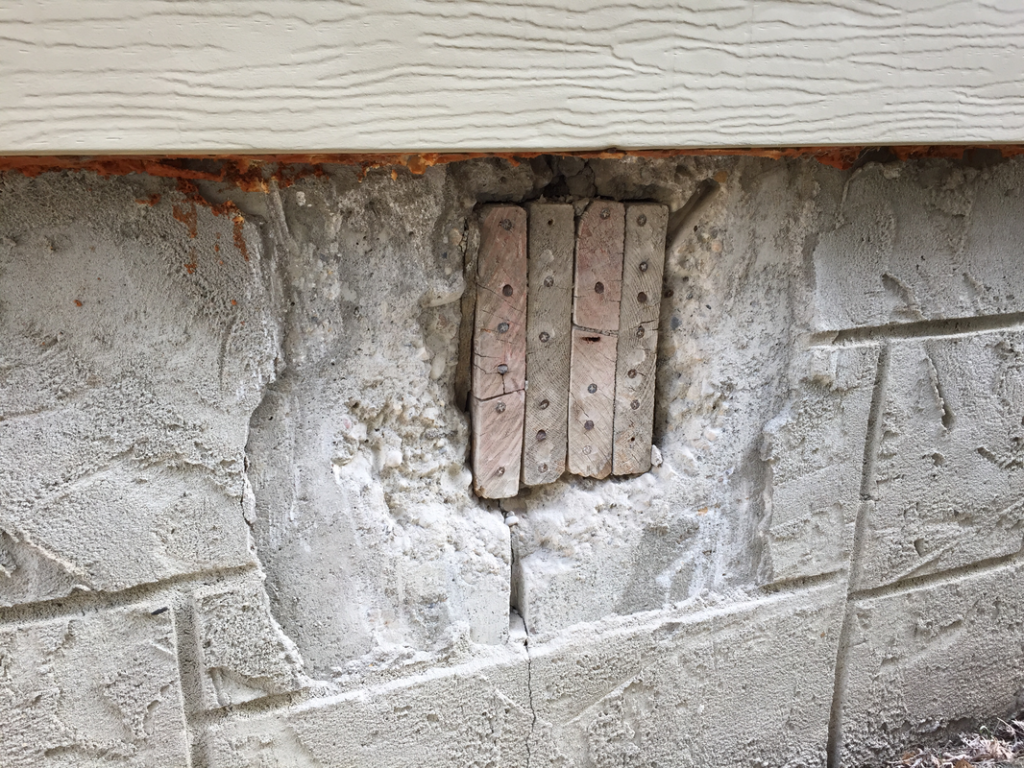
Deteriorated material must be removed back to a stable surface. Applying new parging over loose, hollow or contaminated material can cause the replacement coating to separate with the failed layer underneath it.
3. Cleaning and Surface Preparation
The exposed substrate is cleaned to remove dust, dirt, loose particles and other bond-inhibiting material. A compatible bonding agent may then be applied when required by the selected system and substrate condition.
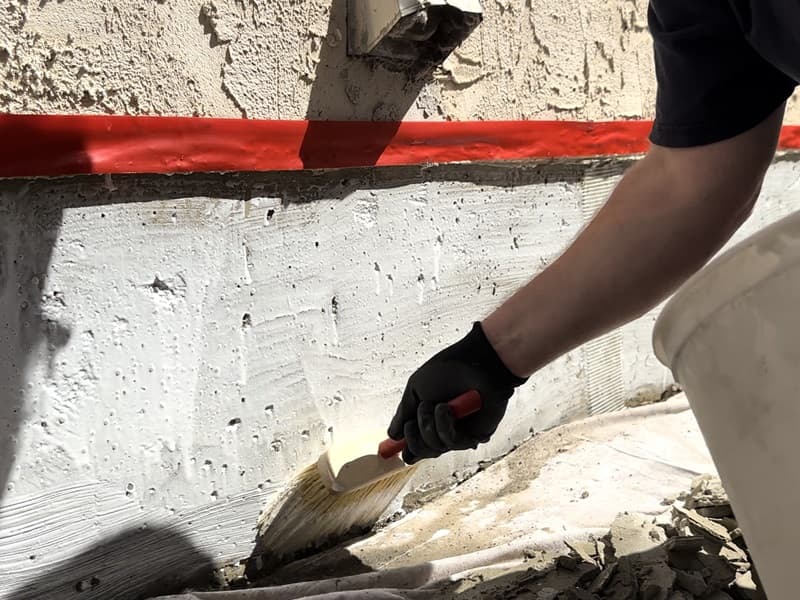
A compatible bonding agent is applied where required to improve adhesion before parging.
4. Mixing the Mortar
The material is measured and mixed according to the product requirements. Consistent water content and mixing time help maintain uniform strength, workability and texture throughout the project.
5. Applying the Parging
The mortar is compacted firmly against the prepared surface and built to an appropriate thickness. Multiple coats, crack reinforcement or metal lath may be required depending on the substrate and scope of work.
Careful attention is given to corners, window transitions, penetrations, adjacent flatwork and the finished-grade line.
6. Texturing and Curing
The surface is hand-finished to create a consistent texture. Cementitious materials continue developing strength after installation, with full curing generally occurring over approximately 28 days. During that period, the finish may change slightly in colour as moisture leaves the material.
You can view examples of our completed before-and-after parging projects throughout Edmonton and surrounding communities.
Common Parging Problems and Their Causes
Why Does Parging Crack?
Parging may crack because of:
- Foundation or structural movement
- Frost movement beside driveways, sidewalks or steps
- Inadequate surface preparation or bonding
- Excess water or improper mixing
- Insufficient thickness or poor curing
- Moisture and freeze-thaw deterioration
Correct preparation, compatible materials and reinforcement where appropriate can improve performance, but no parging system can prevent cracks caused by continued structural movement.
Why Does Parging Become Hollow or Delaminate?
Hollow or separating parging is usually associated with loss of bond. Common causes include application over loose material, contamination, inadequate preparation, prolonged moisture exposure or movement in the substrate.
Covering hollow parging with another thin layer does not restore the failed bond underneath it. Unsound material should be removed before replacement.
Can Parging Be Applied in Cold Weather?
Cementitious parging requires suitable air and substrate temperatures for proper bonding and curing. J and J Coatings generally schedules exterior parging when temperatures are expected to remain at least 4°C for approximately 48 hours.
We do not rely on cold-weather additives to make unsuitable conditions acceptable. Manufacturer requirements and the actual forecast must be considered before work proceeds.
How Can Homeowners Maintain Their Parging?
- Inspect the foundation regularly – Watch for new cracks, hollow areas, staining or damage.
- Maintain positive grading – Direct surface water away from the foundation.
- Keep downspouts functioning – Prevent concentrated water from discharging beside the wall.
- Avoid unnecessary impact – Shovels, lawn equipment and landscaping tools can damage finishes near grade.
- Clean gently – Use a soft brush and mild detergent rather than aggressive pressure washing.
Learn more about professional parging repair and parging replacement.
Why Trust J and J Coatings?
J and J Coatings has specialized in parging repair, replacement and new applications in Edmonton and surrounding communities since 2007. Our work reflects the condition of the existing foundation, the exposure at grade and the materials required for a compatible long-term finish.
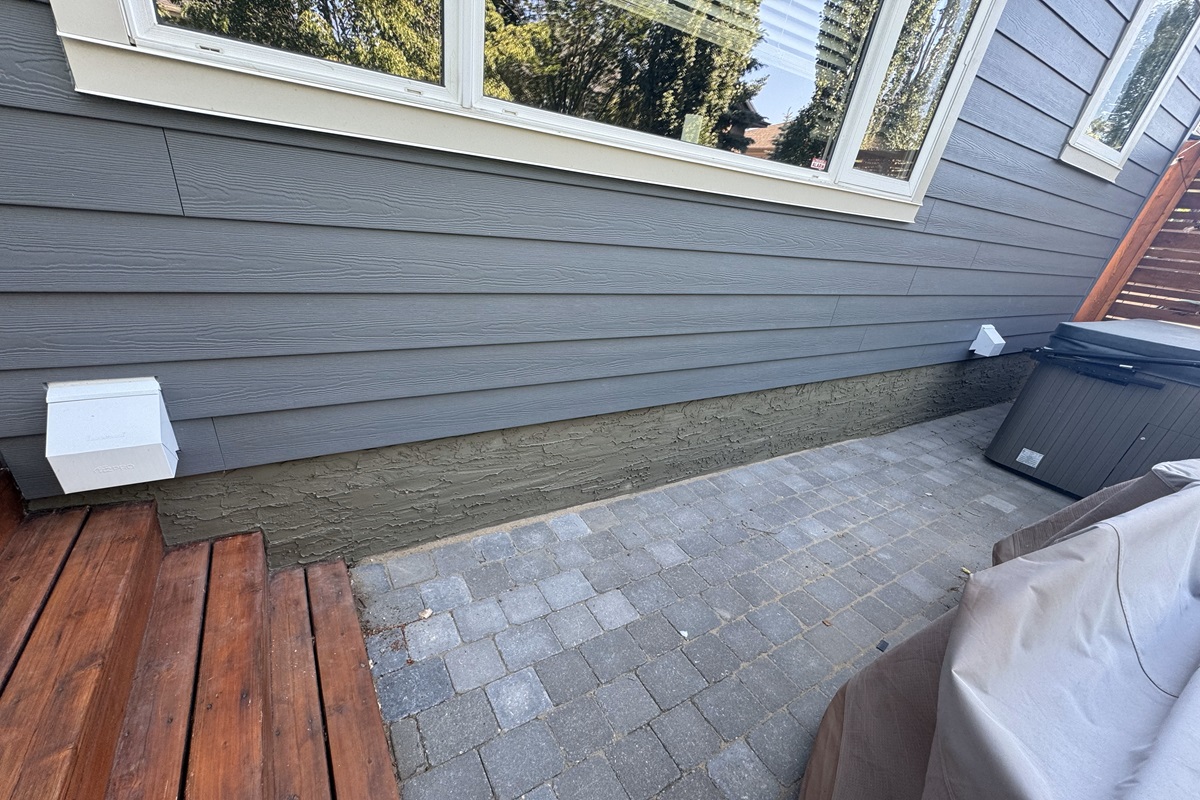
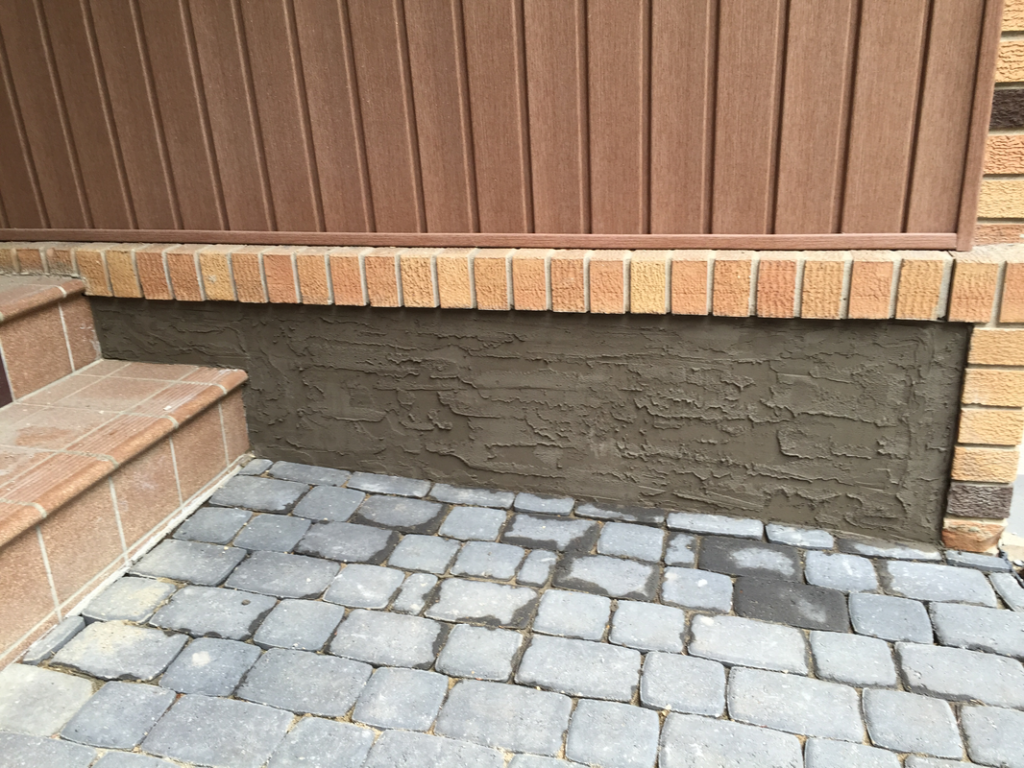
Finished cementitious parging applied to an Edmonton foundation by J and J Coatings.
Have a Parging Concern?
Send clear photos showing close-up damage and wider views of the foundation, grade line, windows and surrounding surfaces. We can review the visible condition and provide a written estimate when the scope can be confirmed.
For current planning ranges, see our Edmonton parging cost guide.
Contact J and J Coatings, Edmonton’s parging specialists, to request a free estimate.